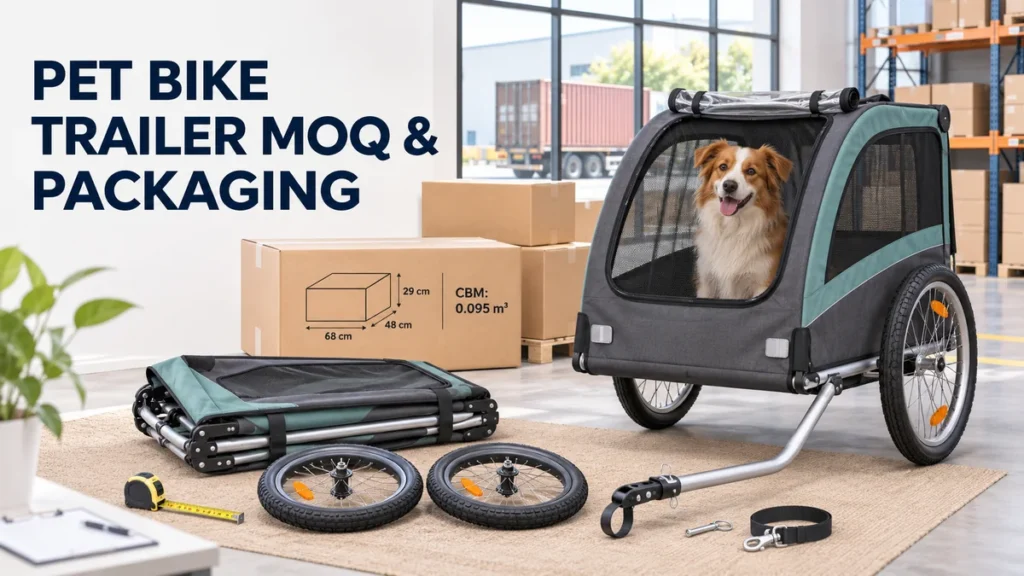
For importers, the quoted unit price of a pet bike trailer tells only part of the purchasing story. Minimum order quantity, frame and wheel configuration, fabric color, private-label packaging and folded carton dimensions can all change the final cost of a wholesale program.
This matters because a pet bike trailer combines a metal frame, wheels, fabric cabin, tow bar, hitch components and accessories in one relatively bulky product. Two trailers that look similar in a catalogue may require different production processes, packaging protection and shipping volume.
This guide explains how pet bike trailer MOQ, packaging and export planning work for B2B buyers. It is designed for pet brands, importers, distributors and wholesalers comparing a bulk pet bike trailer order from China.
For product selection and existing platforms, review our wholesale pet bike trailers. For frame, hitch, wheel and inspection considerations, use the separate pet bike trailer safety checklist.
1. Why Pet Bike Trailer MOQ Varies
There is no universal MOQ for every dog bicycle trailer. The practical minimum depends on the product platform and on which parts must be purchased, finished or printed specifically for the order.
For some existing pet mobility product programs, a planning reference may begin around 100–300 units per model or color. This range is not a guaranteed MOQ for every trailer. The actual minimum must be confirmed after reviewing the model, wheel system, frame finish, fabric, accessories, branding and packaging.
The main MOQ drivers are:
- Frame platform: An existing two-wheel frame generally has a more predictable minimum than a new frame geometry or convertible trailer-stroller structure.
- Wheel specification: Wheel diameter, hub, bearing, tire type, rim finish and quick-release arrangement may each have component minimums.
- Fabric and mesh: Stock colors can support a different quantity from custom-dyed fabric, custom mesh or printed panels.
- Frame coating: A custom powder-coat color can create a batch minimum separate from the sewing minimum.
- Hitch and tow-bar components: A revised connection or adapter can require new tooling, evaluation and component purchasing.
- Accessories: Rain covers, interior mats, flags, reflectors, spare hitches and stroller conversion kits affect order planning.
- Branding: Printed logos, embroidery, sewn labels and customized hardware have different setup requirements.
- Packaging: Printed cartons, manuals, warning labels and barcode sets can carry their own minimum quantities.
Ask suppliers to separate the minimum by model, frame color, fabric color, packaging design and accessory set. A total order of 300 units across several versions is not automatically equivalent to 300 identical units.
2. Match the MOQ to the Development Level
A useful quotation distinguishes an existing platform, a private-label project and structural OEM development.
| Development level | Typical scope | Main MOQ influence | Best suited to |
|---|---|---|---|
| Existing platform | Established frame, wheels, fabric and neutral packaging | Finished-product and color minimum | Initial market testing |
| Private label | Existing platform with selected color, logo, labels, manual and retail carton | Product, fabric, coating and printing minimums | Branded distributor program |
| Structural OEM | New cabin, frame, wheel, folding or tow-system requirements | Engineering, tooling, components and validation | Proven demand and defined forecast |
A first private label dog bike trailer does not need to change every part. Retaining an established frame and wheel system while customizing fabric color, logo, labels, manual and carton can create a differentiated product with fewer development variables.
Structural changes need a wider review. A revised tow bar, axle, wheel attachment, frame joint or folding lock affects more than appearance. The change may alter packaging, assembly, instructions, testing and claim support.
Pet Mobility Source coordinates OEM and private-label services according to the buyer’s target market, specification, quantity and launch plan. We compare suitable production resources before confirming a project MOQ.
3. Send a Complete Product Specification Before Requesting MOQ
A supplier cannot confirm a reliable custom pet bike trailer MOQ from a product photograph alone. The purchasing brief should describe the complete configuration.
Use the following parameter list:
| Specification area | Parameters to confirm |
|---|---|
| Product format | Two-wheel trailer, trailer-stroller or another defined configuration |
| Overall size | Open length, width and height |
| Cabin | Internal usable length, width, height and entry dimensions |
| Folding | Folded dimensions, removable parts and assembly sequence |
| Frame | Material, tube specification, joints, finish and color |
| Wheels | Diameter, tire, rim, bearing, axle and retention method |
| Tow system | Tow-bar construction, hitch type, pin, safety strap and compatible axle arrangement |
| Cabin materials | Exterior fabric, mesh, floor support, liner and weather cover |
| Accessories | Flag, reflectors, tether, mat, rain cover, spare hitch and tools |
| Branding | Logo method, position, labels, manual and barcode |
| Packaging | Unit pack, carton size, units per carton, gross weight and shipping marks |
Load capacity and compatibility statements require supporting evidence for the proposed model. Do not copy a capacity from a similar-looking trailer or describe a hitch as universally compatible without reviewing the actual configuration.
The foldable pet bike trailer for wholesale and private label illustrates the range of details that may be customized, including fabric, frame finish, wheels, logo, interior accessories, documentation and packaging.
4. Design Packaging Around the Folded Product
A foldable trailer can reduce shipping volume, but the smallest possible carton is not automatically the best packaging solution. The frame, wheels and components must arrive in an acceptable condition and be understandable to the importer and end customer.
A packaging plan normally includes:
- agreed folding and disassembly sequence;
- protection for painted or coated frame surfaces;
- wheel and axle separation or retention method;
- protection for the tow bar and hitch;
- secured pins, tools and small accessories;
- fabric and mesh protection from sharp hardware;
- instruction manual and parts list placement;
- retail or neutral carton specification;
- barcode and shipping-mark position; and
- master-carton dimensions and gross weight.
Common packaging components
| Packaging component | Purpose | Points to verify |
|---|---|---|
| PE bag or fabric cover | Surface and moisture protection | Warning text, sealing and abrasion risk |
| Foam sheet or protective sleeve | Separates coated frame parts | Thickness and movement during transport |
| Corrugated divider | Keeps wheels and hardware away from fabric | Strength, position and assembly sequence |
| Small-parts bag | Contains pins, hitch and tools | Item count, sealing and clear identification |
| Printed manual | Assembly, use and warnings | Correct model, language and artwork version |
| Retail/export carton | Handling and product identification | Board strength, printing, dimensions and closure |
Where a wheel, tow bar or conversion component is removed for packing, the instructions must show the approved assembly sequence. The accessory list should match what inspectors count before shipment.
5. Calculate Carton Volume and CBM
Pet bike trailers can be volume-sensitive. Importers should calculate freight using the approved folded packaging rather than the open product size or an early catalogue estimate.
Use this formula:
CBM per carton = length (m) × width (m) × height (m)
Total CBM = CBM per carton × carton quantity
For illustration, assume one folded trailer is packed in a carton measuring 80 × 50 × 30 cm:
0.80 × 0.50 × 0.30 = 0.12 CBM per carton
| Order/carton quantity | CBM per carton | Illustrative total CBM |
|---|---|---|
| 100 | 0.12 | 12.0 CBM |
| 200 | 0.12 | 24.0 CBM |
| 300 | 0.12 | 36.0 CBM |
This example is a volume calculation, not an actual product specification, freight rate or container-loading guarantee. The real carton may be larger or smaller. Pallets, loading gaps, carton orientation, weight limits and mixed products also affect usable loading.
For a pet bike trailer container loading estimate, request:
- confirmed production carton dimensions;
- gross weight per carton;
- units per carton;
- loading orientation and stacking restrictions;
- whether pallets are required;
- container type and carrier restrictions; and
- other products included in the shipment.
Do not calculate order quantity by dividing a container’s nominal cubic capacity by the carton CBM alone. Use a loading plan based on actual carton dimensions and orientation.
For air or courier shipments, chargeable weight may be based on actual or volumetric weight. The divisor and rules vary by carrier and route, so confirm them with the appointed forwarder.
6. Protect High-Risk Components
The packaging review should focus on components that can create damage, missing-part claims or assembly problems.
Frame and finish
Protect coated tubes from rubbing against wheels, axles, tow bars and fasteners. Check contact points after a packed sample has been handled and reopened. A clean sample packed once does not prove the coating will remain undamaged through repeated transport handling.
Wheels and axles
Confirm whether wheels stay attached or are removed. When removed, protect the hub and axle ends and secure all pins or retention parts. The carton should prevent a loose wheel from moving against the fabric cabin.
Tow bar, hitch and small parts
Identify each component on a parts list. Use a sealed and labeled accessory bag where appropriate. Verify that the correct hitch, safety strap, pins and tools are included for the approved version.
Fabric and mesh cabin
Avoid pressure points from metal edges and hardware. Check mesh, zippers, reflective strips and printed logos after unpacking. If the cabin is compressed, establish a recovery period and appearance criteria.
Safety flag and long components
Flag poles and similar long parts need a fixed packing position. Confirm that they cannot puncture the carton, distort the cabin or become separated from the product.
7. Approve a Packaging Sample Before Production
The pre-production sample should represent both the product and the intended packaging. A buyer should not approve the trailer while leaving the packing method for the factory to decide later.
A useful sample record includes:
| Approval area | Evidence to retain |
|---|---|
| Product identity | Model number, configuration and dated photographs |
| Dimensions | Open, folded, cabin and carton measurements |
| Materials | Frame finish, fabric, mesh, liner and approved swatches |
| Components | Wheels, tow bar, hitch, pins, flag and accessories |
| Branding | Logo placement, labels, manual and barcode artwork |
| Packaging | Folding sequence, protection materials and carton arrangement |
| Recovery | Appearance and function after the agreed packed-storage period |
| Claims | Reports and evidence applicable to the approved configuration |
Record every change between the sample and bulk-production proposal. If a wheel, hitch, fabric, coating or packaging structure changes, decide whether a revised sample or additional evaluation is required.
The sample schedule and pet bike trailer sample lead time depend on the platform and customization. Separate product sample preparation, packaging sample approval, revisions and international delivery when planning the launch date.
8. Connect Packaging With Quality Inspection
Packaging inspection is not just a carton count. It should confirm that the finished trailer, components and documents match the approved reference.
A product-specific inspection can include:
- open and folded dimensions;
- frame alignment, joints and finish;
- folding and locking operation;
- wheel rotation, retention and supplied parts;
- tow-bar, hitch, pin and safety-strap configuration;
- fabric, mesh, zippers, seams and floor support;
- reflectors, flag and internal accessories;
- logo, labels, manual, barcode and warnings;
- included-part count;
- folding and packing sequence;
- carton dimensions and gross weight;
- shipping marks and carton condition; and
- agreed package or transport checks.
The inspection plan should define the sample size, acceptance criteria, defect treatment and shipment-release responsibility before production finishes.
Pet Mobility Source develops a project-specific quality-control process around the approved sample and written specification. This helps connect product requirements with production follow-up and pre-shipment verification.
Quality inspection does not automatically prove every performance claim. A static load check, wheel-retention check and towing evaluation answer different questions. Evidence for one version should not be extended automatically to every size, frame or hitch configuration.
9. Build a Realistic Production and Export Timeline
“Production lead time” should not be used to describe the entire purchasing process. Importers should plan each stage separately:
- requirement and quotation review;
- product-platform selection;
- material, color and component confirmation;
- sample and packaging development;
- buyer revisions and approval;
- logo, manual, label and carton artwork approval;
- deposit and material procurement;
- bulk production;
- in-line or final inspection;
- corrective action or reinspection where required;
- cargo release and export documentation; and
- freight booking and transport.
Ask what starts the production clock. It may begin only after the supplier has received the deposit, approved sample and final artwork. Custom components or seasonal capacity can change the schedule.
For repeat orders, retain the approved sample, specification, bill of materials where applicable, artwork versions and inspection criteria. Require notification before component or material substitutions.
10. Compare Quotations on the Same Basis
A lower unit price may represent a different wheel, thinner fabric, simpler hitch, fewer accessories or less protective packaging. Send the same product brief to every shortlisted supplier.
Request a quotation that separates:
- product model and complete configuration;
- quantity by color and version;
- standard and customized component minimums;
- product unit price;
- logo method and setup charges;
- manual, label and printed-carton costs;
- sample and revision charges;
- tooling or engineering charges where applicable;
- testing and inspection arrangements;
- spare hitch, wheel and component prices;
- carton dimensions, gross weight and estimated total CBM;
- production lead time after approvals; and
- delivery term and named location.
This format makes wholesale pet bike trailer shipping cost and total purchasing cost easier to compare. It also reduces the risk that one quotation includes accessories or inspection services that another excludes.
11. Prepare an Importer Quotation Brief
Before requesting a price, send:
- destination country and sales channel;
- intended product format;
- pet size and required cabin dimensions;
- expected load range and claim requirements;
- initial quantity and annual forecast, if available;
- frame, wheel, fabric and color preferences;
- target bicycle and axle configurations;
- required accessories and spare parts;
- logo, label, manual and packaging needs;
- destination-market documentation identified by the importer;
- target shipment date; and
- target cost with non-negotiable requirements.
Avoid asking only for the “best price.” A complete brief allows an OEM pet bike trailer supplier in China or sourcing partner to recommend a realistic platform, MOQ and packaging plan.
How Pet Mobility Source Supports Pet Bike Trailer Importers
Pet Mobility Source is a Guangzhou-based B2B pet travel and mobility supply-chain partner. We support brands, importers, distributors and wholesalers rather than individual retail purchases.
With 10+ years of supply experience, 30+ verified partner factories and projects serving 40+ export markets, we coordinate the steps needed to move from a purchasing brief to shipment-ready goods.
Our support can include:
- product and supplier comparison;
- specification and commercially realistic MOQ review;
- sample and packaging development coordination;
- frame, fabric, wheel, logo and private-label options;
- quotation and carton-volume comparison;
- production follow-up and product-specific inspection;
- multi-supplier order consolidation;
- export-document coordination; and
- international logistics support.
We work as a sourcing and project-management partner across a verified manufacturing network. The proposed factory, product configuration, MOQ, inspection scope and delivery conditions are confirmed for each project.
Frequently Asked Questions
What is the MOQ for wholesale pet bike trailers?
MOQ depends on the selected frame, wheels, fabric, color, accessories, branding and packaging. Some existing pet mobility platforms may begin around 100–300 units per model or color, but the exact pet bike trailer MOQ must be confirmed against the final specification.
Can different colors or models be mixed in one order?
Possibly, but the total order quantity does not automatically remove minimums for frame coating, fabric, wheels or printed packaging. Confirm the allowed mix and component minimums in writing.
How do I calculate pet bike trailer CBM?
Convert the confirmed carton length, width and height to meters and multiply them. Then multiply the result by the carton quantity. Use production packaging dimensions, not the open trailer size.
Can the wheels and tow bar be removed to reduce carton size?
This depends on the approved design. Removable parts may reduce volume but increase assembly and missing-component risk. Validate protection, instructions, included-part control and customer assembly before approval.
What should be checked before a bulk dog bike trailer shipment?
Check the frame, folding system, wheels, tow bar, hitch, fabric cabin, accessories, labels, manuals and packaging against the approved specification. Agree the inspection scope and acceptance criteria before production finishes.
Are pet bike trailers compatible with every bicycle or e-bike?
No. Compatibility depends on the bicycle axle, frame, hitch and towing configuration. E-bike use may create additional compatibility and operating considerations. Use product-specific instructions and supported claims rather than a universal statement.
What information is required for a quotation?
Provide the market, product format, dimensions, quantity, wheel and hitch preferences, materials, colors, accessories, branding, packaging, documentation and delivery target. Include photos or a reference specification where available.
Start Your Pet Bike Trailer Project
A successful trailer program combines a commercially realistic MOQ with an approved product, protected packaging and verified carton data. Confirm the complete configuration before comparing the final landed cost.
Request a project quotation from Pet Mobility Source. Send your target market, estimated quantity, preferred trailer format, customization and packaging requirements. Our team will review suitable supply options and prepare a proposal covering MOQ, sampling, production, inspection and export coordination.